UAE Supermarket and Ecommerce Price Tracking Using Web Scraping
Introduction
Price inconsistencies between physical supermarkets and online marketplaces in the UAE are becoming increasingly visible as consumers compare deals in real time. From fresh groceries to household essentials, the same product can often show a notable price variation depending on the platform or location. Businesses that rely on intuition or periodic manual checks risk missing these fluctuations, which can directly impact revenue, brand positioning, and customer trust.
Modern retailers now rely on automated data collection to make informed pricing decisions across channels. Using tools like E-Commerce Data Scraping Services, brands can systematically gather product prices, discounts, and availability information from leading supermarkets and ecommerce platforms. This approach provides a clear, data-backed understanding of market behavior rather than assumptions based on limited samples.
With UAE Supermarket and Ecommerce Price Tracking Using Web Scraping, retailers are identifying price gaps of up to 30% between offline and online listings. These insights are reshaping how pricing teams adjust strategies, respond to competitor moves, and maintain consistency across channels. The ability to track thousands of SKUs daily allows decision-makers to stay aligned with real-time market conditions and improve their overall pricing accuracy in the fast-evolving UAE retail landscape.
Understanding Cross-Channel Price Variations

These variations are influenced by promotional cycles, inventory movement, logistics costs, and platform-specific discount strategies. Brick-and-mortar stores often rely on weekly promotions and in-store campaigns, while ecommerce platforms adjust prices dynamically based on demand patterns, stock levels, and digital advertising performance.
One of the major reasons behind price gaps is how excess inventory is managed. Online platforms frequently apply deeper discounts to clear warehouse stock, whereas physical stores may hold prices steady to protect perceived brand value. Retail pricing differences between physical supermarkets and online marketplaces in the UAE are far more structured than they initially appear.
Retailers looking to close these gaps are increasingly integrating pricing intelligence into their workflows through a Professional Price Optimization Service. This approach allows them to realign prices across channels without undermining profit margins. Instead of reacting to competitor discounts, brands can apply data-backed adjustments that preserve both competitiveness and long-term value.
Illustrative Price Differences Across Channels:
Breakfast Cereals
- Supermarket Price: AED 18.50
- Online Price: AED 14.20
- Gap Percentage: 23%
Cooking Oil
- Supermarket Price: AED 22.00
- Online Price: AED 16.80
- Gap Percentage: 24%
Dairy Products
- Supermarket Price: AED 9.40
- Online Price: AED 7.10
- Gap Percentage: 24%
Snacks
- Supermarket Price: AED 6.90
- Online Price: AED 5.00
- Gap Percentage: 28%
These figures demonstrate how pricing strategies diverge depending on channel objectives. Retailers that fail to monitor such variations risk losing price-sensitive consumers to more aggressive platforms. By systematically analyzing structured price data, brands can ensure consistency, enhance customer trust, and maintain sustainable margins in a competitive retail environment.
Monitoring Competitive Movements in Retail
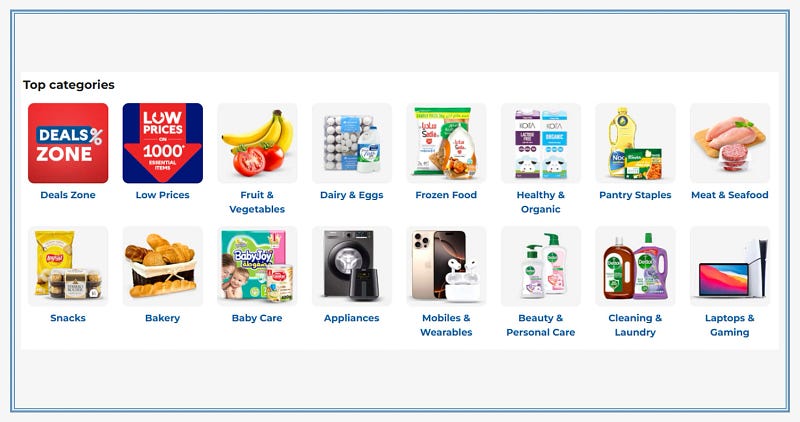
The UAE retail market is defined by intense competition among multinational supermarket chains, regional players, and fast-growing ecommerce platforms. This rivalry results in frequent pricing shifts, often driven by flash sales, loyalty rewards, and limited-time promotions. Retailers must stay informed of these changes to avoid losing market share or triggering unnecessary price wars.
Through Web Scraping Retail Pricing Data, businesses can track competitor pricing behavior at scale. This enables them to identify sudden discounts, promotional patterns, and category-level pricing strategies. Continuous monitoring ensures that brands can respond swiftly to market movements rather than relying on delayed reports or manual checks.
These trends highlight how ecommerce platforms tend to adopt more aggressive discounting strategies to attract online shoppers. This creates pricing pressure on physical stores, which must balance competitiveness with operational costs.
Observed Discount Behavior by Retailer Type:
Large Supermarkets
- Discount Frequency: Weekly
- Typical Discount Range: 5% — 15%
Regional Chains
- Discount Frequency: Bi-weekly
- Typical Discount Range: 10% — 20%
Ecommerce Platforms
- Discount Frequency: Daily
- Typical Discount Range: 15% — 35%
By applying Competitive Price Benchmarking in UAE Retail, brands gain a clearer view of their relative market position. Benchmarking helps determine whether a product is perceived as premium, value-driven, or competitively priced. Instead of reacting impulsively to competitor discounts, retailers can adopt structured pricing strategies that maintain profitability while meeting consumer expectations.
Interpreting Pricing Patterns Over Time
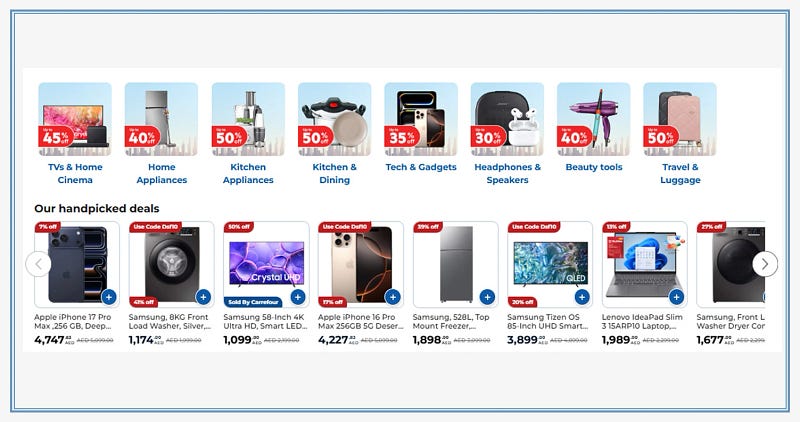
Tracking current prices is only one part of an effective pricing strategy. Long-term data reveals seasonal trends, promotional cycles, and shifts in consumer demand that shape pricing behavior across the UAE retail landscape. Retailers that analyze historical data gain predictive insights that support proactive decision-making rather than reactive adjustments.
Using UAE Retail Pricing Trends Analysis Using Scraped Data, businesses can identify how prices fluctuate during key periods such as Ramadan, back-to-school seasons, and year-end festivities. These insights allow retailers to plan promotions more strategically and avoid unnecessary margin erosion.
Beyond seasonal factors, external influences such as supply chain disruptions and fuel cost changes can also trigger sudden price shifts. Retailers that continuously monitor these patterns can quickly identify anomalies and adjust procurement or pricing strategies accordingly.
Seasonal Pricing Index Overview:
January
- Price Index: 100
- Key Market Driver: Post-holiday normalization
March
- Price Index: 96
- Key Market Driver: Ramadan promotions
June
- Price Index: 102
- Key Market Driver: Summer demand surge
September
- Price Index: 98
- Key Market Driver: Back-to-school offers
December
- Price Index: 105
- Key Market Driver: Festive season pricing
By consolidating multi-platform data through Ecommerce Data Extraction Services UAE, brands gain a unified view of the market. Ultimately, understanding long-term pricing trends enables retailers to maintain consistency, transparency, and competitiveness while adapting to evolving consumer behavior and market conditions.
How Mobile App Scraping Can Help You?
In today’s app-driven shopping environment, mobile platforms play a crucial role in shaping consumer purchasing decisions. With UAE Supermarket and Ecommerce Price Tracking Using Web Scraping, businesses can extend their data collection efforts to mobile apps, ensuring that no pricing signal is missed.
Key Advantages of our solution:
- Tracks app-only deals and limited-time offers.
- Monitors real-time price changes.
- Captures loyalty program discounts.
- Identifies regional pricing differences.
- Detects sudden promotional campaigns.
- Supports faster pricing decisions.
The ability to unify web and app data ensures a more accurate representation of the market, supported by Web Scraping Retail Pricing Data. By integrating these insights into pricing workflows, retailers can maintain alignment across channels and avoid inconsistencies that confuse customers.
Conclusion
Price transparency is no longer optional in the UAE retail market. Consumers actively compare prices across supermarkets and ecommerce platforms, making inconsistencies more visible than ever. With UAE Supermarket and Ecommerce Price Tracking Using Web Scraping, businesses gain the clarity needed to identify gaps, respond to competitor moves, and maintain pricing consistency across channels.
Data-backed strategies driven by Competitive Price Benchmarking in UAE Retail enable retailers to protect margins while staying relevant to price-conscious shoppers. Contact Mobile App Scraping today to implement intelligent price tracking solutions tailored to the UAE retail market.
Readmore :- https://www.mobileappscraping.com/uae-supermarket-ecommerce-price-tracking-web-scraping.php
Originally Submitted at :- https://www.mobileappscraping.com/


Comments
Post a Comment